
Choosing your first guitar can be exciting yet overwhelming. With so many options out there, it’s hard to know where to start. But don’t worry! We’ve got you covered. Here’s a simple guide to help you pick the perfect guitar that suits your needs as a beginner.
Thank you for reading this post, don't forget to subscribe!
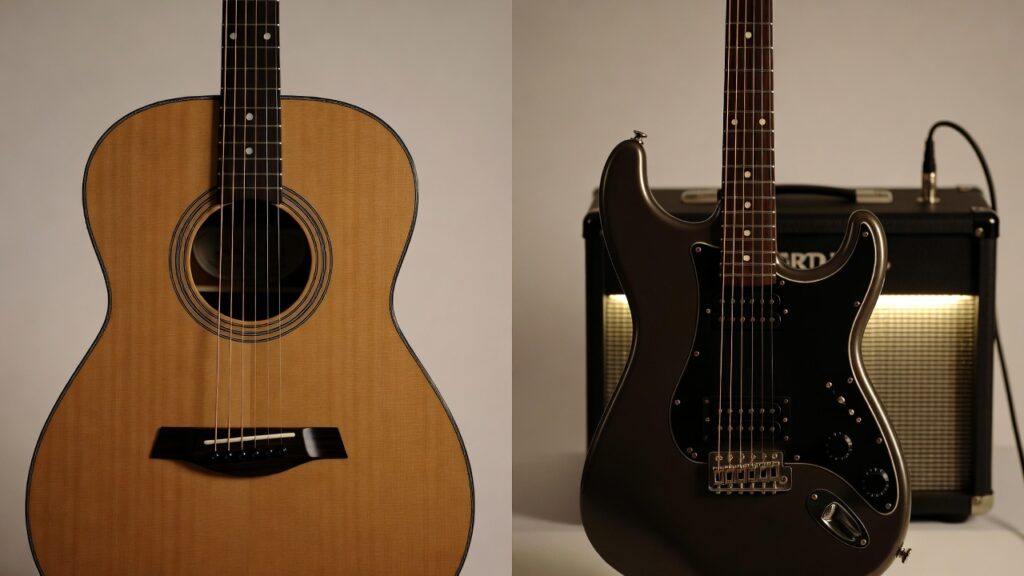
1. Decide on the Type of Guitar: Acoustic or Electric?
First, you need to decide which type of guitar fits your musical taste.
- Acoustic Guitars: These guitars don’t require an amplifier and are perfect for beginners who love unplugged, soft, and folk-style music. They have a fuller sound and are a bit easier to play for first-timers. Great for singer-songwriters or folk music lovers.
- Electric Guitars: If you’re into rock, metal, or pop, an electric guitar might be your choice. They need an amp to work, but they’re lighter, easier on the fingers, and offer more sound variety with different effects and distortion.
2. Consider the Size of the Guitar
If you’re younger or have smaller hands, a 3/4-size guitar or a smaller body guitar would be more comfortable. Guitars come in different sizes, and it’s essential to pick one that fits your body size and playing comfort.
- Full-size guitars are great for adults or teens.
- Smaller-sized guitars are better for children or anyone who has trouble handling the full-size option.
3. Look at the Guitar’s Build and Material
The wood that the guitar is made of will affect its sound. Here are some basics:
- Top Wood (Soundboard): For acoustics, look for solid wood like spruce or cedar, which offer bright tones. Laminate tops are cheaper but don’t produce as rich a sound.
- Neck and Fingerboard: Mahogany necks are durable and offer warm tones, while maple necks tend to produce a brighter sound.
- Electric Guitars: These usually have solid bodies made from mahogany, alder, or ash, which give a range of tones depending on the wood.
4. Check the Guitar’s Action and Playability
The action refers to the height of the strings from the fretboard. Guitars with low action are easier to play because it takes less effort to press the strings down. On the other hand, guitars with high action require more pressure and can be harder on the fingers, especially for beginners.
Tip: If possible, ask the store staff to adjust the action for you, as it can make a big difference in how comfortable the guitar feels.
5. Choose a Budget-Friendly Guitar
It’s tempting to buy an expensive, high-end guitar, but as a beginner, you don’t need to break the bank. There are many good quality, budget-friendly guitars available that will allow you to learn without a huge investment. Look for brands known for beginner guitars like:
- Fender
- Yamaha
- Epiphone
- Ibanez
These brands offer reliable, good-quality guitars at affordable prices.
6. Consider the Guitar’s Sound
When choosing a guitar, pay attention to its sound. Play a few notes and see how it feels. You want something that resonates well and gives you a pleasant tone when you strum.
- For Acoustic Guitars: Check the volume and tone. Acoustic guitars should be loud and clear when you strum them without amplification.
- For Electric Guitars: Plug it into an amp and try out a few different tones. Does it sound rich and clear? Is the distortion what you’re looking for?
7. Try Before You Buy
If possible, always try the guitar before purchasing. Head to a local music store, and test out different models. It’s important to feel comfortable with the instrument and get a sense of how it plays in your hands.
Pro tip: Try playing the guitar standing up with a strap. This will give you a better sense of how the guitar feels while playing.
8. Consider a Guitar Package
Many beginners opt for a guitar starter pack, which includes everything you need to start playing: the guitar, a tuner, picks, a strap, and sometimes even an amplifier (for electric guitars). These kits offer great value for money and make the process easier for first-timers.
9. Don’t Forget to Budget for Accessories
While you’re thinking about the guitar, don’t forget about the essential accessories you’ll need:
- Tuner: A clip-on tuner will help you keep your guitar in tune easily.
- Picks: You’ll need at least a few picks in different thicknesses to find what suits your playing style.
- Guitar Strap: Especially useful for electric guitars or if you plan to play standing up.
- Guitar Case: Protect your guitar when not in use. If you’re getting an acoustic, a hard case is a good investment.
- Capo: This allows you to play in different keys easily.
Final Thoughts
Choosing your first guitar doesn’t have to be stressful. Take your time, set a budget, and focus on comfort and playability. Whether you go for an acoustic or an electric guitar, remember that the most important thing is that you enjoy playing!
Bonus Tip: Don’t be afraid to ask for advice from friends or teachers who are experienced guitarists. They can help guide you toward a great choice based on your style and goals.

